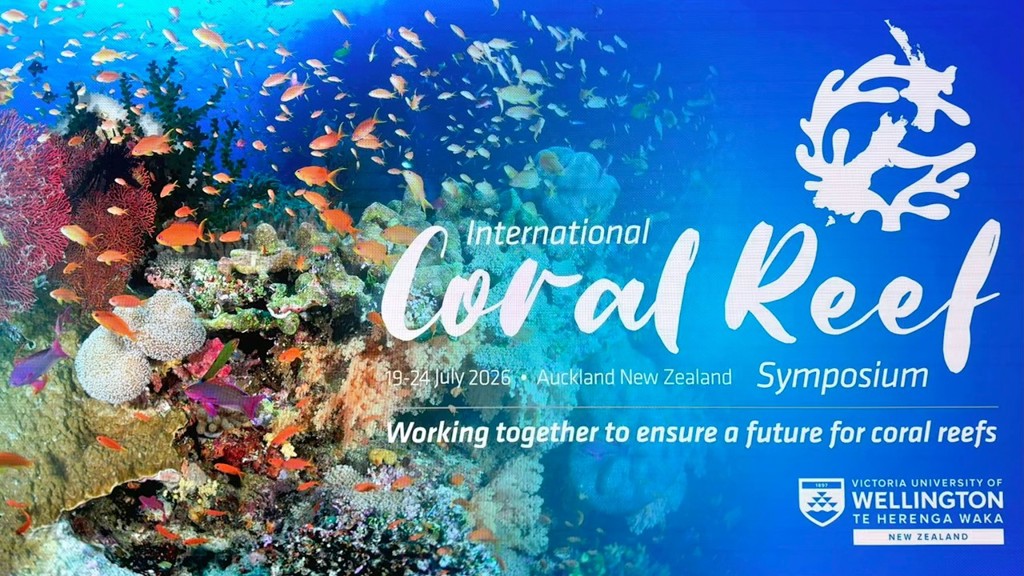
From community visioning to conservation action: An integrated approach to coral reef conservation in Fiji.
At the ICRS in New Zealand, Neelam Bhan, GEF Coral Reef Rescue Project Coordinator, WCS Fiji presented “From community visioning to conservation action: An integrated approach to coral reef conservation in Fiji.” This presentation highlighted Fiji's work towards a National Action Plan for Coral Reef Conservation and the importance of integrating community voices into coral reef management and protection.
The 16th International Coral Reef Symposium (ICRS), recently hosted in Aotearoa New Zealand in July 2026, is the world's leading conference dedicated to coral reef science, conservation, and management. Held every four years, the Symposium brings together researchers, practitioners, government representatives, non-governmental organisations, indigenous knowledge holders, students, and marine resource managers from around the world.

Synopsis
Fiji hosts approximately 7,500 km² of globally significant coral reef ecosystems, including the Great Sea Reef and Vatu-i-Ra Seascape, which are recognised for their diversity and resilience to bleaching events and cyclones.
These reefs support the livelihoods of Indigenous and non-Indigenous Fijian communities and are central to Fiji's tourism industry. However, they face growing threats from unsustainable fishing, pollution, and coastal development.
To address these pressures, Fiji is developing and latterly will be implementing a National Action Plan for Coral Reef Conservation (NAPCRC).
The process began with community visioning workshops that combined Traditional Ecological Knowledge and scientific approaches to identify threats and capture the values and perspectives of customary rights holders. A participatory design process then brought together communities, government agencies, and coral reef experts to translate these aspirations into conservation actions.
Using scientific and community knowledge, WCS conducted a spatial prioritisation analysis to identify high-integrity, climate-resilient reef areas requiring conservation, demonstrating how spatial planning can support evidence-based, community-led conservation.

Latest Coral Reef Rescue News Updates from Fiji
- Fiji Advances National Action Plan for Coral Reef Conservation
- From Fiji to Frankfurt: Conservation Leader Neelam Bhan secures €50,000 prize for coral reef conservation.
- Communities Empowered in Northern Fiji through Financial Literacy and Business Governance Workshop
- Fiji and Solomon Islands Collaborate on Communication Strategy for Coral Reef Rescue
- Fiji hosts inaugural National Hub Meeting for the Conservation of Coral Reefs
- Empowering Communities, Strengthening Reefs: Uniting voices for coral conservation in Fiji
- Fiji's commitment to coral reef conservation
- Fiji Successfully Launches National Hub for Coral Reef Conservation
Coral Reef Rescue Project - Free Courses and Tools
The GEF -7 Coral Reef Rescue Project has released free online courses and resources on coral reef conservation. These include;
- Coral Reefs: Introduction to Challenges and Solutions
- Coral Reefs: Data and Monitoring
- Coral Reefs: Sustainable Blue Economy
- Coral Reefs: Climate Resilient Communities
Alongside these courses, a new online decision support tool was created Coral Reef Rescue Portal. This brings together over 70 existing coral reef datasets and resources in one easy-to-use, searchable platform.
Reports and Publications
- Strategic Action Programme for International Waters of Pacific Islands
- Republic of Fiji National Oceans Policy 2020-2030
- Status and trends of coral reefs and associated coastal habitats in Fiji's Great Sea Reef , Andradi-Brown D.A, et al. 2022
*Note: more detailed information about Fiji's involvement in the Coral Reef Rescue Project is located in the Project Document
About the Coral Reef Rescue Project
The Coral Reef Rescue Project is a US$7 million project funded by the Global Environment Facility to build capacity and solutions that ensure the long-term survival of climate resilient coral reef ecosystems and the communities that depend on them. The project is implemented by the World Wildlife Fund and executed by The University of Queensland in partnership with Wildlife Conservation Society (Fiji, Madagascar, Solomon Islands), Yayasan Reef Check (Indonesia), Palawan Council for Sustainable Development (Philippines) and Marine Parks and Reserves Unit (Tanzania).
.jpg)